Simply Garden
✓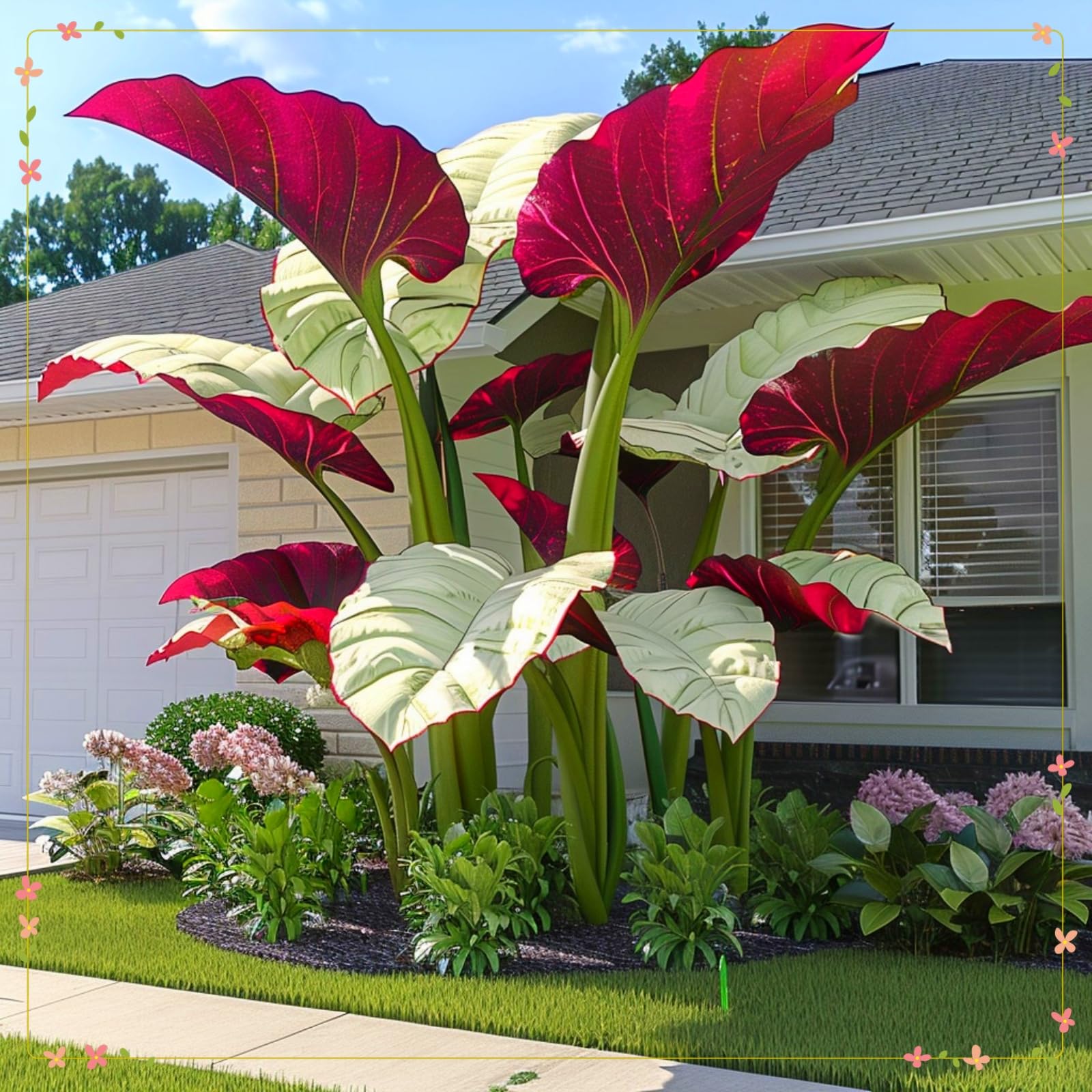
Growing elephant ears is easy—they love sunlight and fertile, moist soil and can grow anywhere. Elephant ears are water-intensive plants. The more water they receive, the larger they grow, and their leaves become quite large. Elephant ears are ideal for greening larger rooms and are a year-round potted plant. During the growing season, remove any yellowed or broken leaves. Avoid overfertilizing, as this will cause the leaves to stretch, become thinner, and become prone to breaking or falling over. Growing and Care: 1. Temperature Bulbs begin to germinate at temperatures between 13 and 15°C. The optimal temperature for seedling growth is 20 to 25°C, and for plant growth, 20 to 30°C. A large temperature difference between day and night promotes bulb formation. The optimal temperature during bulb formation is 28 to 30°C during the day and 18 to 20°C at night. 2. Water: This plant prefers a moist environment and requires moist soil during its growing season, especially during the period of vigorous leaf growth and bulb formation. Water requirements are high, so increase watering or shallow irrigation in the furrows is recommended. 3. Light: This plant is not very demanding on light intensity. It grows best in diffused light, but requires short days for bulb formation and expansion. 4. Soil: This plant prefers fertilizer, and its bulbs form in the subsoil. Therefore, choose a loam or clay loam soil rich in organic matter and with a deep soil layer.
Customer reviews
10 Trustpilot reviews total, with 2 shown at a time.
I wrote to Bigamart's customer support and they accompanied the process of reshipping the item until it finally arrived. I felt a genuine effort to solve the problem till it was finally solved.
The package was here in Australia from England in a few days — so quick! Something was missing and they refunded it straight away. Pretty happy with these guys.
You might also like