
Verve
⏳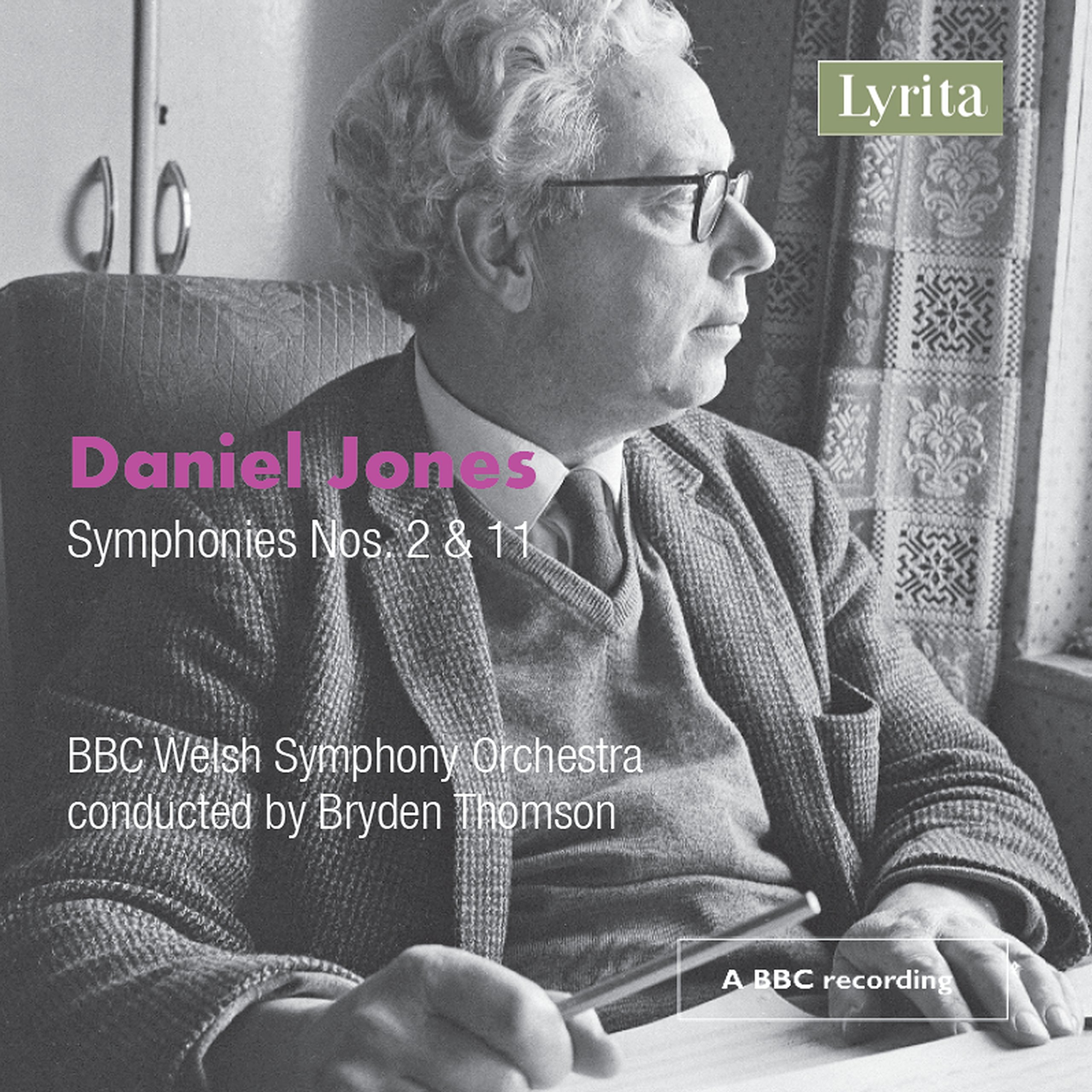
Product Description Daniel Jones (1912-1993) composed in a wide range of genres, yet the cornerstone of his prolific output is the Symphony, memorably described by him as a dramatic structure with an emotive intention. Though each of his thirteen symphonies is a unique and highly personal statement, the cycle as a whole maintains an unwavering consistency of quality and vision. Daniel Jones demonstrates a steadfast integrity throughout, never bowing to the latest trends. His priority is always to communicate directly with the listener. Paul Conway Review We were already indebted to the enterprising Lyrita label for several recordings of music by Daniel Jones. The new release very usefully fills some gaps with unique recordings of both works. Better still, further releases like these from BBC recordings are in preparation for later in the year and 2018: Symphonies Nos. 3, 5 and 12 (BBC Welsh Orchestra/Bryden Thomson) and 13. My own benchmark for twentieth-century music is well met by these and Jones other symphonies: accessible works but without any suggestion of sounding facile. Jones described the symphony as a dramatic structure with an emotive intention. If I find more of the latter than the former here, thats no bad thing on this occasion. Paul Conways valuable programme notes authoritative and informative complete a most recommendable release. --Brian Wilson, MusicWeb-International In a Gramaphone Bryden Thomson said of Daniel Jones; He knows what he wants, he knows what he s writing and he knows when it isn t right. You can t say that about a lot of composers these days. Precisely when Jones first conceived the idea of composing a cycle of 12 symphonies each based on a different note of the chromatic scale as tonal centre in unclear but it was probably not during the writing of the First (1944-47), originally designated in E minor . At 50 minutes long, it is Jones s largest symphony, in which the fledgling symphonist revealed his mastery and understanding of the medium for the first time. His view of the symphony evolved radically, with goal-driven forms and growing concision neither Nos 10 (1981-82) nor 11 (1983) exceed 20 minutes. There are few obvious resonances in the musical language, though I have always thought the structures of the First and 43 minute-long Second (1950, centred around A, neither major or minor) nodded towards Russian models. With its increased use of percussion, No 2 is brighter in tone that its predecessor, with a recurring allusion to Vaughan Williams s F minor Symphony in the finale. Both the Tenth and Eleventh Symphonies follow dramatic-tragic courses, the latter a memorial to his friend George Froom Tyler, erstwhile chairman of the Swansea Festival. The reception of Joness music has usually been respectful rather than enthusiastic, even in these august pages so let me raise the bar somewhat. These are strong and important works that repay familiarity. The performances by the BBC Welsh Symphony Orchestra and Thomson are finely realised, alive to their rhythmic intricacies and growing orchestrational confidence. Lyrita s remastering provides depth and clarity to the studio-bound sound. As with the symphonies of Havergal Brian, a cycle of which is also near completion, what is needed next is for these symphonies to be taken up in both concert hall and studio. --The Gramophone …His symphonic music reflects that fierce intellectual power, together with a strong sense of architecture and dramatic contrast. All articles about Jones's music will tell you that they are each based on a different note of the chromatic scale – i.e. all twelve white and black notes' as it were throughout the octave. That doesn't mean to say that they are rooted in a particular key, simply that they have a tonal centre, added to which, that tonal centre shifts frequently during the work. However, it's hard to find out what those central notes are for each of the symphonies. All I can tell you, from listening rather closely, is that of these two works, the one, No 2, centres around A natural, while No 11 seems to have E flat as its centre of gravity. Thomson and the BBC Welsh SO give an impressive performance, committed, concentrated, and with much fine individual and ensemble playing. Jones's scoring is sometimes rather blatant, with overuse of the cymbals in particular. But we should remember that this is a relatively early work, for Jones didn't really gain momentum as a composer until his late twenties. …That suddenness seems to play a part in the brevity of Symphony No 11. A mere ninety seconds long, the second movement, a light and mischievous Capriccioso, stops almost in mid-phrase; the strings take up the yearning Elegiaco theme of the third movement, a startling change of mood. Does this reflect the circumstances of the symphony's composition? It certainly seems to express powerfully the idea of 'In the midst of life, we are in death'. The finale is more objective, but does conclude with a
Customer reviews
10 Trustpilot reviews total, with 2 shown at a time.
I wrote to Bigamart's customer support and they accompanied the process of reshipping the item until it finally arrived. I felt a genuine effort to solve the problem till it was finally solved.
The package was here in Australia from England in a few days — so quick! Something was missing and they refunded it straight away. Pretty happy with these guys.
You might also like